What if Everyone Could Vote on Everything?
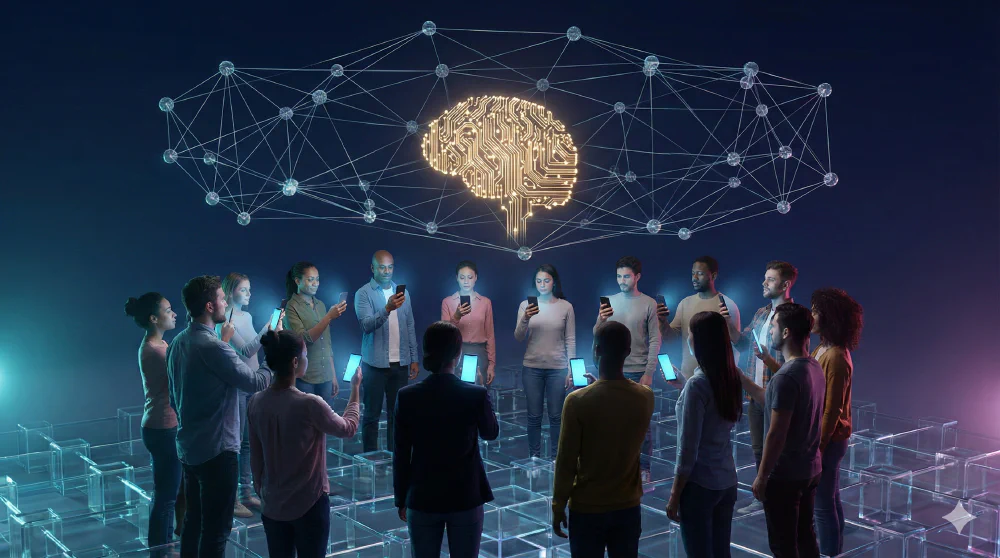
Imagine a world where politics isn’t about politicians — it’s about people. Where the rules are few, the power is shared, and technology does the heavy lifting to keep things fair. Sound far-fetched? Maybe not.
Less Rules, More Freedom
The starting point is simple: you should be free to live your life however you choose, as long as you’re not hurting anyone else. We still need rules to stop dodgy builders cutting corners or people getting away with dangerous behaviour. But beyond that? Less is more.
The Problem with Representatives
Our current system puts enormous power into the hands of a few individuals who supposedly represent thousands of us. As the old saying goes, power corrupts, and absolute power corrupts absolutely. Even the ancient Romans struggled with this. So why are we still doing it?
The good news is we now have the technology to let every single person cast a vote directly — what’s known as direct democracy. Not just at election time, but on local issues, regional decisions, and national policy.
But People Don’t Have Time to Research Everything
This is where it gets interesting. Think about Brexit — instead of a proper, evidence-based debate, we got a shouting match and a binary choice. Most people simply don’t have time to study every issue in depth.
So what if AI could help? Not by making decisions for us, but by giving us clear, unbiased summaries of the options. Think of it as a research assistant that can’t be bribed, doesn’t have an agenda, and never gets tired. The key is that AI remains a tool for understanding, never a tool for deciding.
Voting Securely and Privately
For this to work, you’d need a secure digital identity — a way to prove you’re eligible to vote without revealing who you are. This is where technology like encryption and blockchain (essentially a tamper-proof digital record) comes in. Your identity gets verified once, and after that, your vote is just an anonymous, validated tick in a box.
Who Keeps the System Honest?
You’d need a dedicated group of technical experts whose sole job is maintaining the system — not wielding political power. They can’t be bought, incentivised, or politically motivated. Their only purpose is to keep the infrastructure fair, secure, and incorruptible. The data itself could be stored in multiple locations, backed up redundantly, and made practically indestructible.
Power to the Regions
The vision also means devolving power. Most decisions would happen locally or regionally, with a light-touch national framework ensuring consistency on things like speed limits and emergency care.
The Bottom Line
This isn’t really a political philosophy — it’s a technology-enabled rethink of how we govern ourselves. Fewer laws, more direct participation, AI-assisted understanding, and privacy-preserving digital identity. It’s about protecting us from ourselves — from feudalism, authoritarianism, and the concentration of power.
Is it idealistic? Absolutely. Is it possible? Increasingly, yes.
What’s Your Experience?
Would you trust a digital voting system? What would need to change before direct democracy could work? Leave a comment below or reach out on social media.
If you’re interested in how technology can transform governance and decision-making in your organisation, hit the “Let’s talk” button and book a free explorative call.

Axel Segebrecht is founder and director of Be Braver Ltd, a UK-based technology consultancy specialising in digital sovereignty, self-hosted infrastructure, and FOSS migration for European businesses.

Discussion